
Your cellphone is roofed with germs and grime. Here is how you can clear it with out inflicting injury
Be sure you’re cleansing your cellphone the suitable method.
Derek Poore/CNET
Your cellphone is the host to micro organism from in every single place. Take into consideration how typically you place your cellphone on counters and tables. Or contact your cellphone after touching meals, door handles, ATM buttons, cash or a buying cart. Germs are in every single place, however with the ever-changing steering on whether or not the coronavirus is more likely to unfold by way of objects and gadgets in shared widespread areas in addition to by airborne transmission, it is time to as soon as once more speak about the suitable and incorrect methods to scrub your cellphone display screen.
Although surfaces aren’t thought-about the major method that the coronavirus spreads — once more, that is by airborne transmission, so air flow, masks and social distancing are key — normally, any germ that is in your cellphone or case can probably switch to your physique. The Facilities for Illness Management and Prevention says the coronavirus can final from hours as much as a number of days on surfaces and objects. It is really helpful to scrub your cellphone a minimum of as soon as a day and it is best to observe your cellphone’s guide on how you can clear it with out damaging it.
Whatever the state of the pandemic, cleansing your cellphone is a good suggestion. However how do you take away make-up and gunk from it with out damaging the one that you love machine? We’ll share suggestions for disinfecting, eradicating fingerprint smudges and extra out of your display screen. You must also know which cleansing merchandise to keep away from and how you can take care of telephones rated for water resistance. We have just lately up to date this story.
Disinfect with wipes or the suitable alcohol-based answer
If you happen to contact your cellphone after touching a public door deal with or grocery cart, your first thought is likely to be to scrub it with rubbing alcohol. Do not. Straight alcohol can strip the oleophobic and hydrophobic coatings that preserve oil and water from damaging your cellphone’s show and different ports.
Some web sites recommend creating a mixture of alcohol and water your self, however it’s essential to get the focus proper. Get it incorrect and you could possibly injury your cellphone. The most secure guess is to make use of disinfectant wipes that comprise 70% isopropyl alcohol to scrub your cellphone display screen.
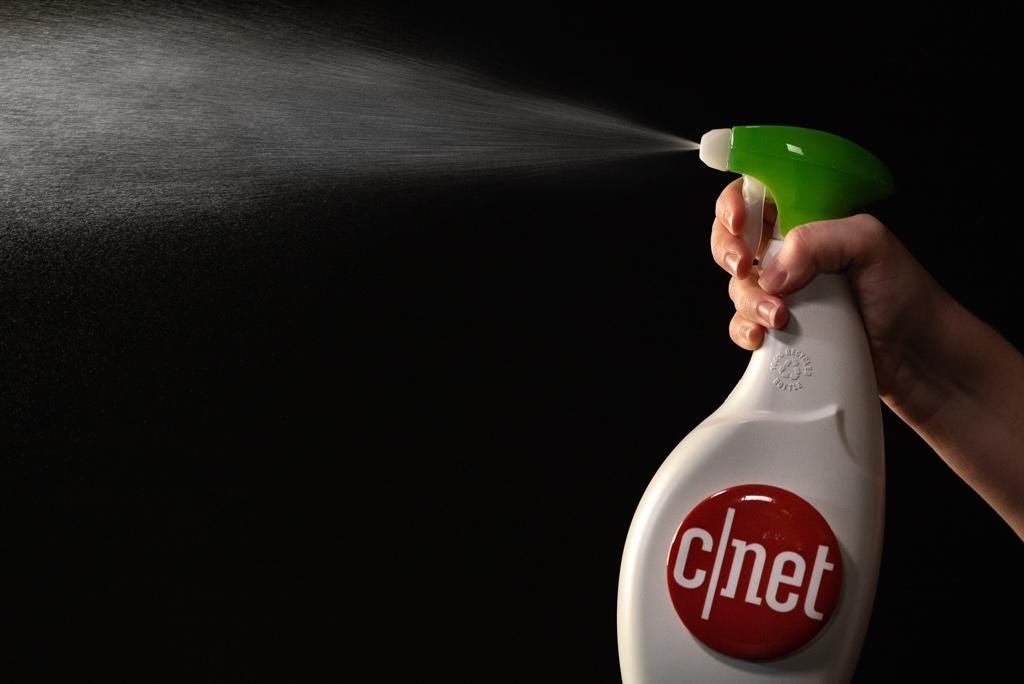
Drop the window cleaner and counter spray, now.
Derek Poore/CNET
Earlier than the pandemic, we had been instructed to not use disinfectant wipes on our cellphone screens, however Apple says it is OK to make use of Clorox Wipes and others with comparable concentrations.
AT&T’s cleansing tips recommend that you simply “spray a nonabrasive or alcohol-based (70% isopropyl) disinfectant immediately on a gentle lint-free material and wipe down your machine whereas it’s powered down and unplugged.” Samsung has additionally mentioned you’ll be able to create an alcohol-based answer of 70% ethanol or isopropyl alcohol, utilized with a microfiber material.
An alternative choice for day-to-day cleansing is investing in a UV mild, equivalent to PhoneSoap. This UV mild firm claims its product kills 99.99% of germs and banishes micro organism. So far as we all know, it hasn’t been examined in relation to this pressure of coronavirus.
Eliminate fingerprint smudges with a microfiber material
Fingerprint smudges are onerous to stop as a result of your pores and skin continuously produces oils. That implies that each time you choose up your cellphone, it is sure to get fingerprints throughout it.
The most secure and only option to clear your display screen is with a microfiber material. If the display screen is in determined want of cleansing, use distilled water to dampen the microfiber material after which wipe down your display screen — keep away from squirting the water immediately on the display screen. This technique can be utilized on the again and sides of your cellphone, too.
You too can attempt a microfiber display screen cleaner sticker, which you follow the again of your cellphone and might pop off when it’s essential to give it a wipe-down.
Take a look at Samsung’s suggestions on cleansing your cellphone, too.

Watch this:
How to clean your phone (and things to never do)
2:34
Remove your fingerprint smudges and other muck with these cleaning tips.
warat42/iStockphoto
Remove sand and lint with this tape trick
Lint and sand can get stuck in the small ports of your phone and in the crevices where the screen meets the body.
The best way to remove sand and lint is Scotch tape. You can lay it along the creases and speaker, and roll it up and gently place it in the ports. The tape’s stickiness will pull out any lint or sand that may be stuck in your phone.
For the smaller speaker holes that tape can’t reach, use a toothpick (gently) or try to vacuum the debris out with a small crevice tool. These tools can also be used for other small appliances or hard-to-reach areas in your car.
Wipe away makeup with a damp cloth
When you have a full face of makeup and need to make a call, guess what that foundation is about to stick to? That’s right, your phone screen. And while you may use makeup remover to take off your makeup every night, you shouldn’t use it as a screen cleaner due to some chemicals that could be lurking in the ingredients. (Organics.org explains the chemicals that could be in your makeup remover.)
Instead, you could get your phone its own makeup remover, such as Whoosh. The company claims its product is safe for all screens and contains no alcohol, chlorine, ammonia or phosphates that could damage the various screen coatings.
You can also use a damp microfiber cloth to clean the phone — and then throw that cloth in the wash. Make sure to use a spray bottle to spritz the cloth, rather than running it under water. The less water, the better.
Can you wash waterproof phones?
If you have a water-resistant phone, rated for IP67 and above, you can rinse it with water. Although these phones, like the iPhone 7 ($234 at eBay) and newer and the Galaxy S phones, can withstand submersion for up to 30 minutes in up to 3 feet of water, it’s a much better idea to use a damp or wet cloth to clean your phone. Then dry your phone with a dry, soft cloth to remove the water. Make sure to pat dry all speakers and ports.
Dunking the phone in water or running it under a faucet will get water into the ports, which means you won’t be able to charge it until they’re dry, and that can take time. Remember that having a water-resistant phone is more about peace of mind in case of accidents than it is about purposely taking your phone for a swim.
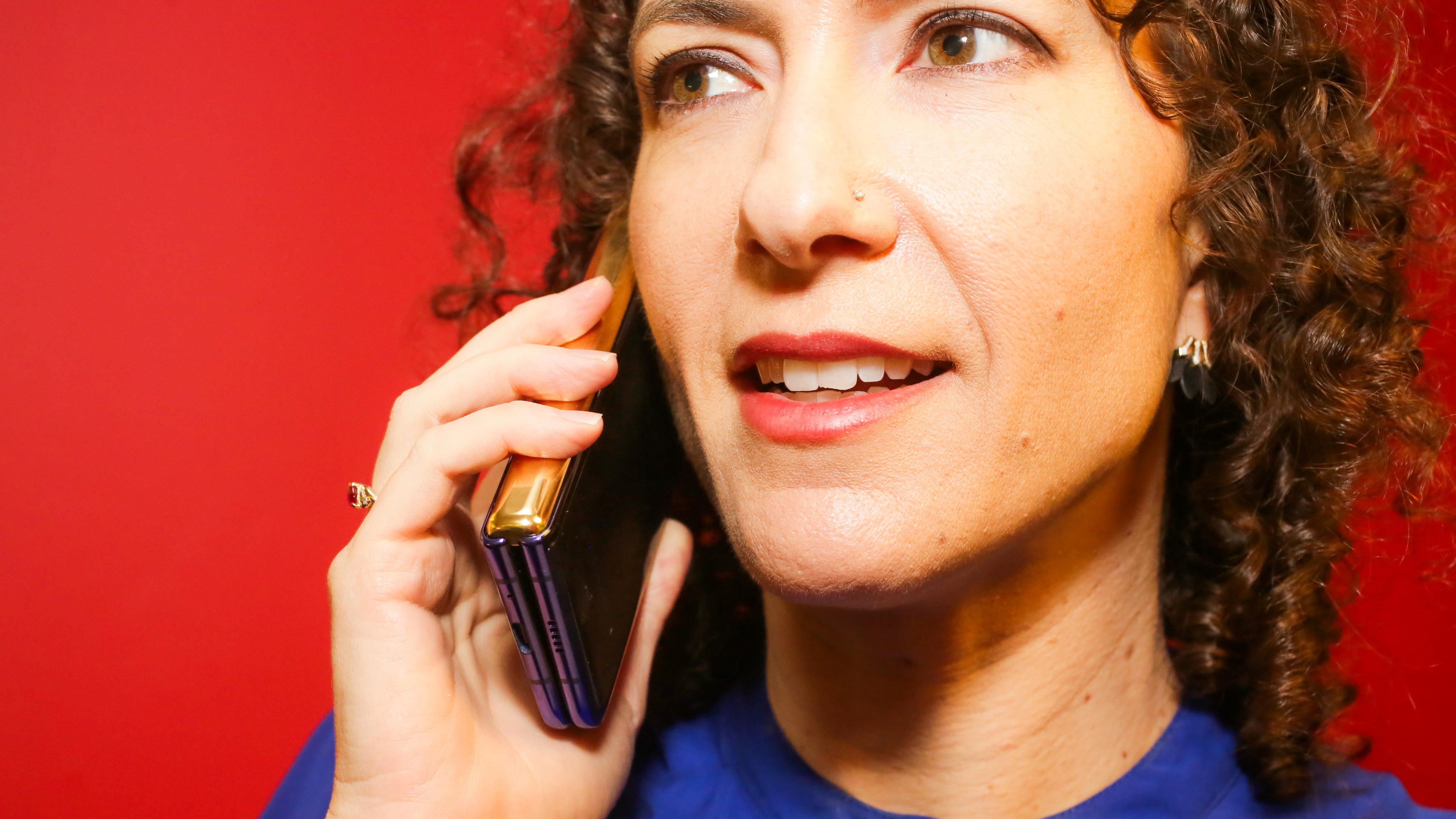
If you make a call while wearing makeup, guess what gets on your phone.
Sarah Tew/CNET
9 things you should never use to clean your phone
We’re here to warn you, not shame you, but drop that bottle of Windex, stat. This is how not to clean your screen.
Hand sanitizer
Since some hand sanitizers have ingredients like fragrances and ethyl alcohol, it’s best to keep sanitizer off your phone’s screen. However, if you’ve touched anything outside your home, you should sanitize your hands before touching your phone to prevent viruses and bacteria from spreading. For best results, use a manufacturer’s hand sanitizer rather than making your own at home (they’re not as effective).
Window cleaner
You clean your mirrors and windows with window cleaner, and they’re squeaky-clean, so window cleaner must be OK to use on your phone? Wrong! Some newer phones, such as the iPhone XR ($499 at Amazon), have a protective coating that resists water and oil and that can wear out over time.
Using harsh cleaners can strip the coating and could leave your phone more vulnerable to scratches. James LeBeau, an associate professor of materials science and engineering at MIT, told us that any cleanser with an abrasive agent will likely scratch the surface, so those should be avoided entirely.

Watch this:
Make your own gadgets to protect you from coronavirus
1:30
Kitchen cleaners
A screen’s scratch-resistant properties won’t get ground down by cleaning agents, but stripping that protective coating is still a problem. That’s why Apple also suggests not using household cleaning products to clean your iPhone, including bleach. Bar Keepers Friend, for example, states that its abrasive formula may harm the protective layer. Bon Ami states not to use on glass with coatings.
Paper towels
They may be the go-to for cleaning your desk, but keep them away from your phone. The paper can shred, making the debris on your phone much worse. Paper towels can even end up leaving scratches on your screen.
Rubbing alcohol
Since many newer phones have a protective coating, rubbing alcohol can wear it away more quickly over time, causing your phone to be more prone to scratches. Make sure to check for alcohol in the product ingredients on any “safe to use” phone screen cleaners. Apple says to avoid alcohol when cleaning its devices.
Makeup remover
Some makeup removers may have chemicals that can be harsh to an electronic screen. LeBeau suggests avoiding makeup remover and instead using a soft cloth with a little bit of water.
Compressed air
Your phone is delicate, so blowing an intense amount of air into its portals can cause damage, especially to your mic. Tech companies, like Apple, specifically warn not to use compressed air.
Dish soap and hand soap
While your dish and hand soaps may be gentle, the only way to use them is to combine them with water. Most phone companies suggest keeping water away from your phone, so again, stick to a damp cloth.
Vinegar
This is a no-no. Vinegar will strip the screen’s coating. You could, as Lifehacker suggests, use very diluted vinegar to cleanse other parts of your phone. Android Central suggests a 50/50 mix with distilled water for cleaning the sides and back.
from WordPress https://ift.tt/3xU9FMF

Comenta